Easter traditions of the Hutsul region

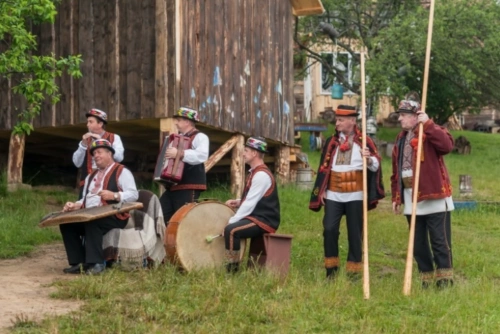
Easter in the Hutsul region is not only a celebration familiar to Ukrainians, but a multi-layered fusion of Christian and pagan customs, everyday amulet rituals, and even archaic games that date back to the pre-Christian period.

“Kukutsy” instead of money
The Easter cycle in the Hutsul region began not with Palm Sunday, but with Holy Wednesday. It was then that housewives baked small loaves of bread — “kukutsy” from white flour, which was a scarce product in the Hutsul region. They were assigned to “kukutsary” — local children who went from house to house from evening until late at night, distributing loaves of bread to relatives and neighbors, and in return received various treats or even money from the owners. In different villages, the tradition also had local variations: for example, in Kosmach, they went for the "cuckoos" in the morning on Holy Thursday, and a fire was lit in front of each house. Even the visit of the first child to the house had a meaning: if a girl came in, expect a litter of heifers and lambs, if a boy, bulls and rams would be born.
Easter cake with a pistol
Baking Easter cake in the Hutsul region is a separate sacred event. Until the beginning of the 20th century, Hutsuls often bought ready-made Easter cake (due to a lack of flour), but when they baked at home, they did so according to strict ritual rules. Easter cake in the Hutsul region, as in many other regions of Ukraine, was never rich, that is, sweet, because it was a ceremonial bread that was baked with minimal addition of sugar or honey. It was decorated with a cross and various dough products. When the Easter cake was put in the oven, the owner went outside and made sure that no one entered the house and “spoiled” the pastry. While the Easter cake was baking, no one sat down in the house - otherwise it would also “sit down”. When the Easter cake was ready, the owner solemnly fired a pistol!

A separate Easter cake for the cow
Since the Hutsul region was based on cattle breeding, Easter was also permeated with care for livestock. After blessing, the owner would apply the Easter cake to the cow’s spine three times, wishing for a good offspring. And sometimes they baked and blessed a special “cattle Easter cake”, which was crushed into a bucket, salted and given to the animals. Beekeepers tapped the consecrated Easter cake (a wooden vessel used instead of a basket) on the hives and conjured up swarms.
Shell for the Rakhmans: Hindu Trace in the Carpathians
The most exotic custom of Hutsul Easter is “Rakhman Easter”. Four weeks before the holiday, the hostess, smearing the Easter cake with eggs, threw the shell into a mountain stream. It was believed that it would float all the way to the Rakhmans - mysterious pious people who live somewhere far in the East. There, the shell becomes a whole egg again, and the Rakhmans, having learned about the arrival of Easter, divide it among themselves. Four weeks later, on “Rakhman Easter”, the Hutsuls did not go to church, but refrained from work. The very word “rahmanny” in the Hutsul language meant the highest degree of honesty and decency. Researchers suggest that this is an echo of Indo-Aryan (Brahmin) beliefs, which have been surprisingly preserved in the Carpathians.
Photo by Dmytro Nevolin
Other News