Story of Kateryna Slovak, a Craftswoman from the Ivano-Frankivsk Region Who Creates Hutsul Keptars and Serdaks
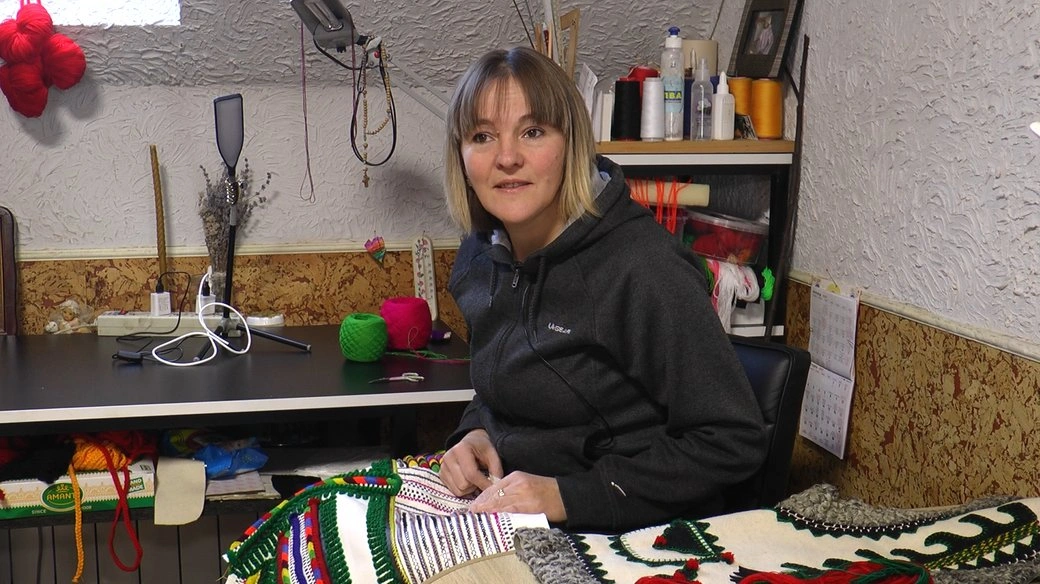
Kateryna Slovak, a craftswoman from Ivano-Frankivsk Oblast, has created more than 350 keptars (short sleeveless fur coats) and serdaks (winter and/or demi-seasonal outerwear worn open) over 13 years. Her mother-in-law taught her how to make replicas of ethnic Hutsul clothing. On the Suspilne Ivano-Frankivsk website, you can read about Kateryna’s childhood dream, which has become her lifework.
Kateryna Slovak was born in Kryvorivnia, Verkhovyna district, and now lives in Staryi Kosiv. She says she has wanted to master the sewing art since childhood.
“In our family, my uncle was a sewer, a furrier. He made different keptars of the leather he produced. When I was a child, I came to him and asked him to teach me the art of sewing; he said: “That’s hard work; keep away from it, baby.” He didn’t want to teach me. I fulfilled my dream when I got married,” says Kateryna Slovak.
Her mother-in-law taught her how to create Hutsul clothes. The craftswoman usually sews keptars based on old photos or makes replicas of ancient clothes. Kateryna Slovak does not change ornamentation to pass the legacy to future generations.
The craftswoman says that earlier products were made of leather. Now, she uses artificial leather, as well as cashmere and cloth. Kateryna Slovak spends one to three months to make one keptar. She does all the work herself, from the pattern to the most sophisticated element – the aigulets.
Nine years ago, Kateryna started sewing serdaks of cashmere and woollen cloth.
“Women’s and men’s serdaks are alike. The difference is that the sleeves of women’s clothes’ are rolled up, and those of men’s – straight. Other elements – collars and pendants – are identical. Serdaks used to be very simple, no flowers, etc., just embroidered corners," the craftswoman says.
Berlin-based designer Frank Wilde posted a photo of a Ukrainian keptar made by Kateryna Slovak on his Instagram page. However, the woman says that foreigners rarely buy traditional Ukrainian clothing. Half of the orders are made by Ukrainians who have moved abroad.
"You can wear just a keptar without other elements of Hutsul clothes."
Kateryna Slovak says that her daughter Suzanna Slovak helps her promote traditional Ukrainian clothing. She combines keptars with modern clothes, including jeans.
Suzanna says that she uses individual elements, for example, pendants, as accessories for bags, clothes, or hair ornaments.
"I started wearing keptars to show that you can use them separately without the need to buy the whole set, which is very expensive. Legend has it that one keptar used to cost as much as a cow. Well, it was considered chic. And it is still now,” she says.
Now Suzanna makes a replica of an 1892 keptar from the village of Richka, Kosiv district. She has created a catalogue in which she collected old photographs of keptars from different regions of Ukraine.
Other News